
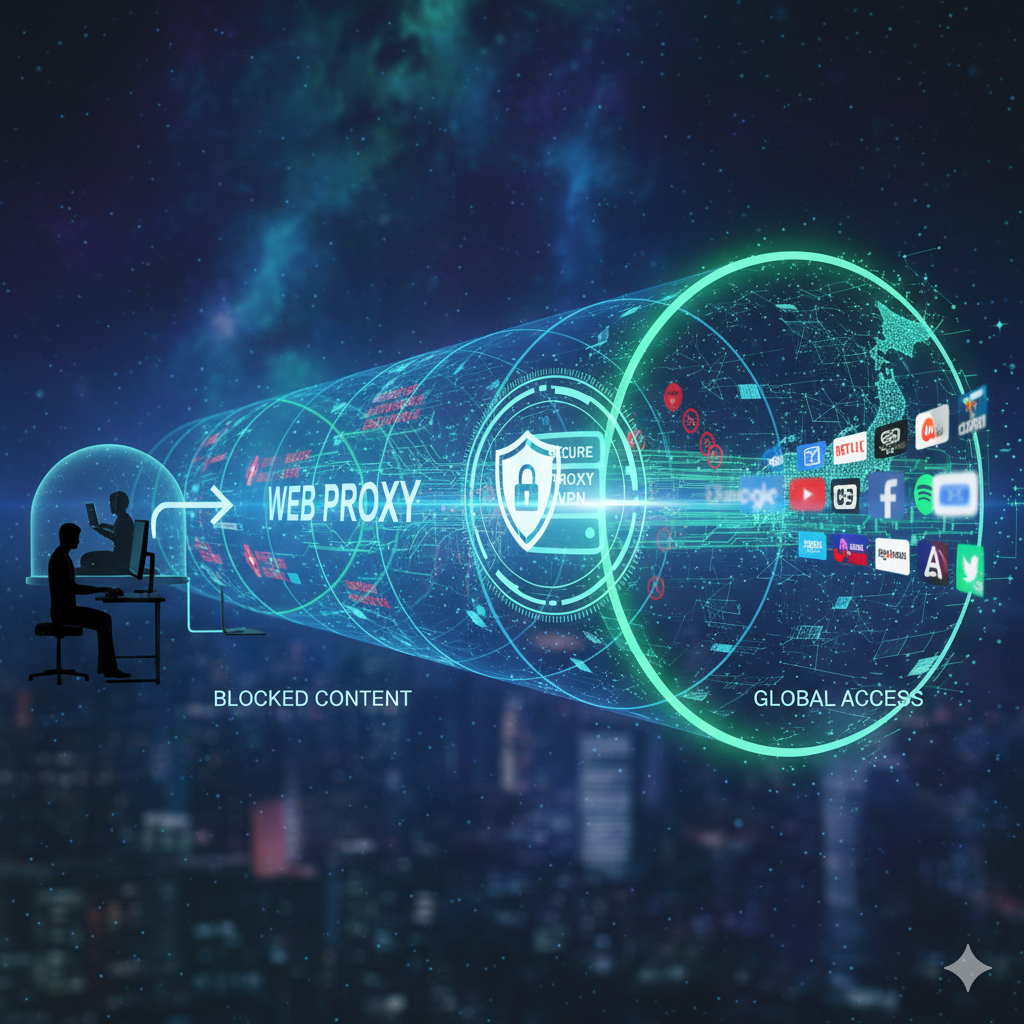
Why Web Proxies Still Belong in Zero-Trust Architectures
Zero-trust does not mean removing all intermediaries. It means removing implicit trust. Every access decision should be evaluated in context, and that requires inspection points.
Web proxies serve this role naturally because they operate at the application layer. Instead of asking, “Is this device on the right network?” a proxy asks more meaningful questions:
What resource is being accessed?
What kind of request is being made?
Does this behavior align with policy and intent?
This makes proxies especially useful in environments where users work remotely, applications are cloud-hosted, and traditional network boundaries no longer apply.
A Common Mistake: Assuming Identity Solves Everything
A personal observation from the field: many teams believe that once identity is locked down, the job is done. Strong authentication, conditional access, and device compliance checks feel like comprehensive protection.
They are not.
Identity tells you who the user is. It does not tell you whether the session is being abused, automated, or subtly redirected by malicious code. I have seen fully authenticated users unknowingly leak data through browser extensions or scripted requests that identity controls never flagged.
Web proxies help cover this gap by evaluating behavior, not just credentials.
Where Web Proxies Fit in a Zero-Trust Model
In practice, proxies tend to support zero-trust strategies in three key areas.
Outbound Traffic Control
Outbound access is often the weakest link in security design. Organizations spend enormous effort protecting internal systems but allow users to reach almost anything on the internet with minimal oversight.
A web proxy changes that by:
Limiting access to approved external services
Blocking known high-risk destinations
Inspecting requests for suspicious patterns
This is especially relevant for developers, analysts, and administrators whose roles require broad access. Zero-trust does not mean unlimited outbound freedom—it means justified access with guardrails.
Inbound Application Protection
Reverse proxies are frequently used to shield internal or customer-facing applications. In a zero-trust context, they can:
Enforce authentication before traffic reaches the app
Apply request validation and rate limiting
Block malformed or anomalous requests early
This approach is particularly effective for legacy applications that cannot easily be modified to support modern security controls.
Context-Aware Enforcement
More mature implementations integrate proxies with identity providers, endpoint signals, and logging platforms. This allows policies to adapt dynamically.
For example:
Read-only access from unmanaged devices
Stricter controls for access from unfamiliar locations
Temporary privilege reductions during high-risk sessions
The proxy becomes an enforcement engine that understands context, not just IP addresses.
Real-Life Example: Visibility Changes Behavior
One organization I worked with struggled to understand how sensitive data was leaving the company. They had strong access controls and encrypted storage, yet incidents kept occurring.
The issue was not malicious insiders. It was convenience.
Employees were copying data into unsanctioned tools because they were fast and familiar. Identity controls allowed it. Network segmentation did not see it. Once outbound web traffic was routed through a proxy, the pattern became obvious.
The solution was not heavy-handed blocking. It was targeted policy, combined with education. The proxy provided clarity first—and control second.
Insider Tip: Use Observation Mode Before Enforcement
A practical tip that saves pain: do not enforce strict proxy rules immediately.
Start by observing.
Run policies in a non-blocking mode and review:
What destinations are actually being used
Which requests are business-critical versus habitual
Where policy assumptions differ from reality
This step often reveals surprises. Teams frequently discover dependencies they forgot about or workflows that were never documented. Observation builds trust and prevents backlash.
Supporting Least Privilege at the Application Level
Least privilege is easy to say and difficult to implement. Network-level controls are usually too coarse, and identity-based permissions often grow over time.
Web proxies help by narrowing access at the request level. Instead of allowing access to an entire service, policies can permit only:
Specific endpoints
Approved request types
Reasonable payload sizes
This limits blast radius without disrupting legitimate work. Many modern attacks rely on over-permissioned access rather than broken authentication, making this granularity especially valuable.
Choosing and Evaluating Proxy Approaches
Not all proxy solutions align well with zero-trust principles. The goal is not just traffic routing—it is intelligent enforcement.
When evaluating options, experienced teams look for:
Seamless integration with identity systems
Strong logging and auditability
Support for encrypted traffic without breaking applications
Flexible policy models that evolve over time
For a practical, non-promotional overview of how proxy services are commonly understood and applied, this guide on Proxy Site offers useful context grounded in real usage scenarios.
The important point is not vendor selection. It is architectural fit.
Another Overlooked Issue: Stale Proxy Policies
Proxies are often treated as infrastructure rather than policy engines. Once deployed, rules are rarely revisited.
This is risky.
Zero-trust assumes continuous evaluation. Proxy policies should change as applications, users, and risks change. A rule written two years ago may now expose unnecessary access or block legitimate work.
A simple discipline helps:
Review proxy rules alongside access reviews
Retire unused policies regularly
Tie rules back to business justification
This keeps the proxy aligned with intent, not habit.
Insider Tip: Detection Is as Valuable as Blocking
One subtle but powerful use of proxies is detection. Not everything suspicious should be blocked immediately.
Patterns such as:
Automated behavior from human users
Repeated low-level probing
Unusual request timing
often signal emerging issues before they become incidents. Proxies provide this visibility because they sit directly in the request path.
When combined with identity and endpoint data, they become an early warning system rather than a blunt instrument.
Operational Realities That Matter
From experience, a few practical factors often determine whether proxies succeed or fail:
Latency tolerance matters more than raw speed
Clear error messages reduce workarounds
Developers need transparency into what is blocked and why
If users feel the proxy is arbitrary, they will bypass it. If they understand it, they adapt.
A Practical Wrap-Up
Web proxies may not dominate zero-trust marketing slides, but they play a meaningful role where it counts: at the moment of access. They add behavioral insight, enforce least privilege at a granular level, and provide visibility that identity alone cannot.