
The way we power our homes is undergoing a radical transformation. Historically, homeowners have relied entirely on a one-way relationship with the electrical utility: energy flowed from the grid into the house, and you paid for what you consumed. Today, that model is obsolete.
The convergence of rising electricity costs, increasing grid instability, and the rapid adoption of residential solar has thrust Home Energy Storage Systems into the spotlight. A home battery is no longer just a niche product for early adopters; it is the cornerstone of modern, resilient, and sustainable living.
Whether you are looking to slash your monthly utility bills, keep your lights on during an outage, or maximize your investment in solar panels, a home energy storage system offers a comprehensive solution.
This comprehensive guide will explore everything you need to know about home batteries, how they work, their myriad benefits, and how to select the right system for your household needs.
What Is a Home Energy Storage System?
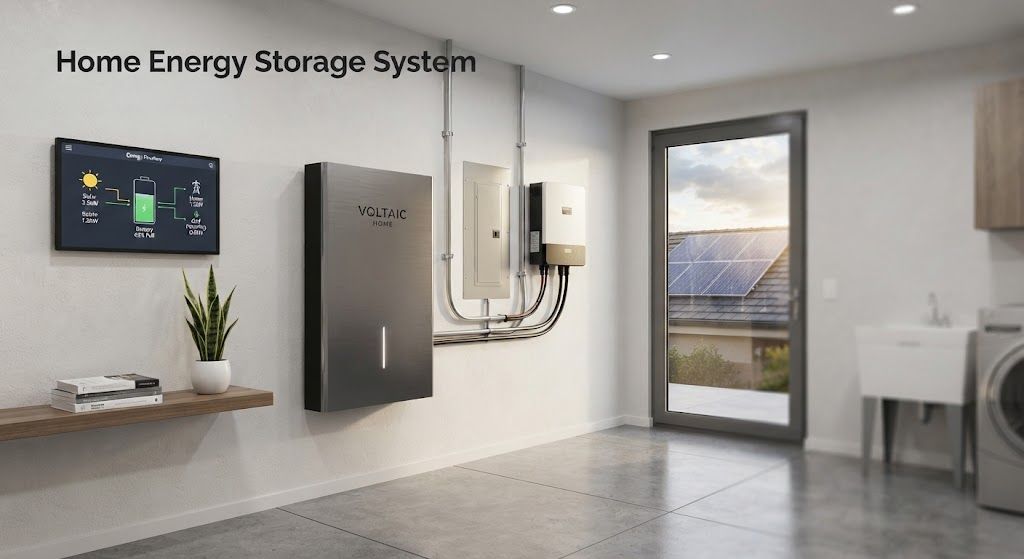
At its simplest, a home energy storage system is a large, rechargeable battery pack designed to store electrical energy for later use.
When integrated into your home’s electrical system, it works in concert with either the utility grid or your on-site renewable energy generation (typically rooftop solar panels). It captures excess energy produced during the day or drawn from the grid when rates are lowest, storing it as direct current (DC) electricity. When you need power—at night, during peak pricing hours, or during a blackout—an integrated inverter converts the stored DC power into the alternating current (AC) power used by your household appliances.
A complete system consists of three primary components:
The Battery Modules: Typically using Lithium Iron Phosphate (LiFePO4) or Nickel Manganese Cobalt (NMC) chemistry for high energy density and safety.
The Inverter/Battery Management System (BMS): The "brains" of the operation, which regulates charge/discharge cycles, monitors battery health, and performs DC-to-AC conversion.
The Monitoring Software: A user-friendly app that allows homeowners to track energy production, consumption, and battery status in real-time.
The Four Pillars of Value: Why Homeowners Are Choosing Storage
Investing in a home energy storage system delivers value across four key areas: financial savings, energy independence, sustainability, and resilience.
Maximizing Solar Self-Consumption (The ROI Driver)
If you already have solar panels, a battery is the most effective way to maximize your investment. Without storage, solar systems typically export 50–70% of the energy they generate back to the grid during the sunny midday hours when household demand is low. You are often credited at a low "feed-in tariff" rate for this energy.
In the evening, when the sun goes down and your demand peaks (cooking, lighting, entertainment), you must repurchase power from the utility at retail rates.
A home energy storage system allows you to capture that excess midday solar production and store it for evening use. Instead of exporting cheap solar energy and buying expensive grid power, you become self-sufficient, drastically reducing or eliminating your monthly electricity bills.
Time-of-Use (TOU) Load Shifting
Even without solar panels, a home energy storage system can provide significant financial savings in regions with Time-of-Use electricity rates.
Utilities charge different prices for electricity depending on the time of day. Off-peak rates (late night/early morning) are cheap, while on-peak rates (late afternoon/evening) can be two to three times more expensive.
A smart battery system can be programmed to charge from the grid only during the cheapest off-peak hours. It then disconnects from the grid and powers your home using stored energy during the most expensive on-peak hours. This practice, known as energy arbitrage, allows you to "beat" the utility’s pricing structure every single day.
Unmatched Energy Resilience and Backup Power
Perhaps the most immediately appreciated benefit of a home energy storage system is the security it provides during grid outages.
Traditional grid-tied solar systems are legally required to shut down during a blackout for the safety of utility repair crews. If the grid goes down, your solar panels stop producing.
A battery-backed system acts as a microgrid. When the grid fails, the system seamlessly disconnects from the main utility line and creates its own stable power supply for your home, typically within milliseconds. Whether it’s a short-lived thunderstorm or a multi-day public safety power shutoff, you keep critical circuits operational—refrigeration, medical equipment, Wi-Fi, lighting, and device charging.
Supporting a Sustainable Future
By integrating storage with renewable energy, you are reducing reliance on fossil fuel-based "peaker plants" that fire up during times of high demand. A home battery allows you to consume cleaner, locally generated energy 24/7, shrinking your carbon footprint and contributing to a more decentralized, stable energy grid.
Assessing Your Needs: How to Choose the Right Battery
Home energy storage systems are not "one-size-fits-all." Selecting the right hardware requires analyzing your specific energy goals and household consumption profile.
Key Battery Specifications Defined:
Capacity (kWh): This measures how much energy the battery can store. Think of it as the size of your fuel tank. A standard home battery might offer 10 kWh to 15 kWh of usable capacity.
Power Rating (kW): This measures how fast the battery can discharge energy at any given moment. A high power rating is necessary if you need to run heavy loads simultaneously (e.g., an electric vehicle charger, AC unit, and oven).
Depth of Discharge (DoD): This indicates what percentage of the battery’s total capacity can be utilized without damaging the internal cells. Modern lithium batteries typically offer a high DoD (90%–100%).
AC-Coupled vs. DC-Coupled: This refers to how the battery connects to solar panels. AC-coupling is generally easier to retrofit to existing solar systems, while DC-coupling is slightly more efficient for new installations.
Determining System Size:
If your primary goal is backup power, you will prioritize selecting a battery with enough power output to start large appliances and enough capacity to last the duration of an average outage in your area.
If your primary goal is financial savings (time-of-use arbitrage or maximizing solar), you will need a battery sized to offset your typical evening consumption, ensuring you never have to pull expensive power from the grid.
Conclusion: The Linio Tech Advantage
The transition to clean, independent, and resilient home energy is not just a trend; it is the future of residential living. A home energy storage system is the single most effective upgrade you can make to your home to take control of your energy usage, protect your family from outages, and achieve long-term financial predictability.
As the market for residential batteries matures, quality and intelligent integration matter more than ever.
When you are ready to embark on your journey toward energy independence, trust Linio tech. Engineered for superior performance, unmatched reliability, and seamless intelligent control, Linio tech provides the advanced home energy storage systems designed to power your home today, tomorrow, and for decades to come. Experience the power of independence with Linio tech.