
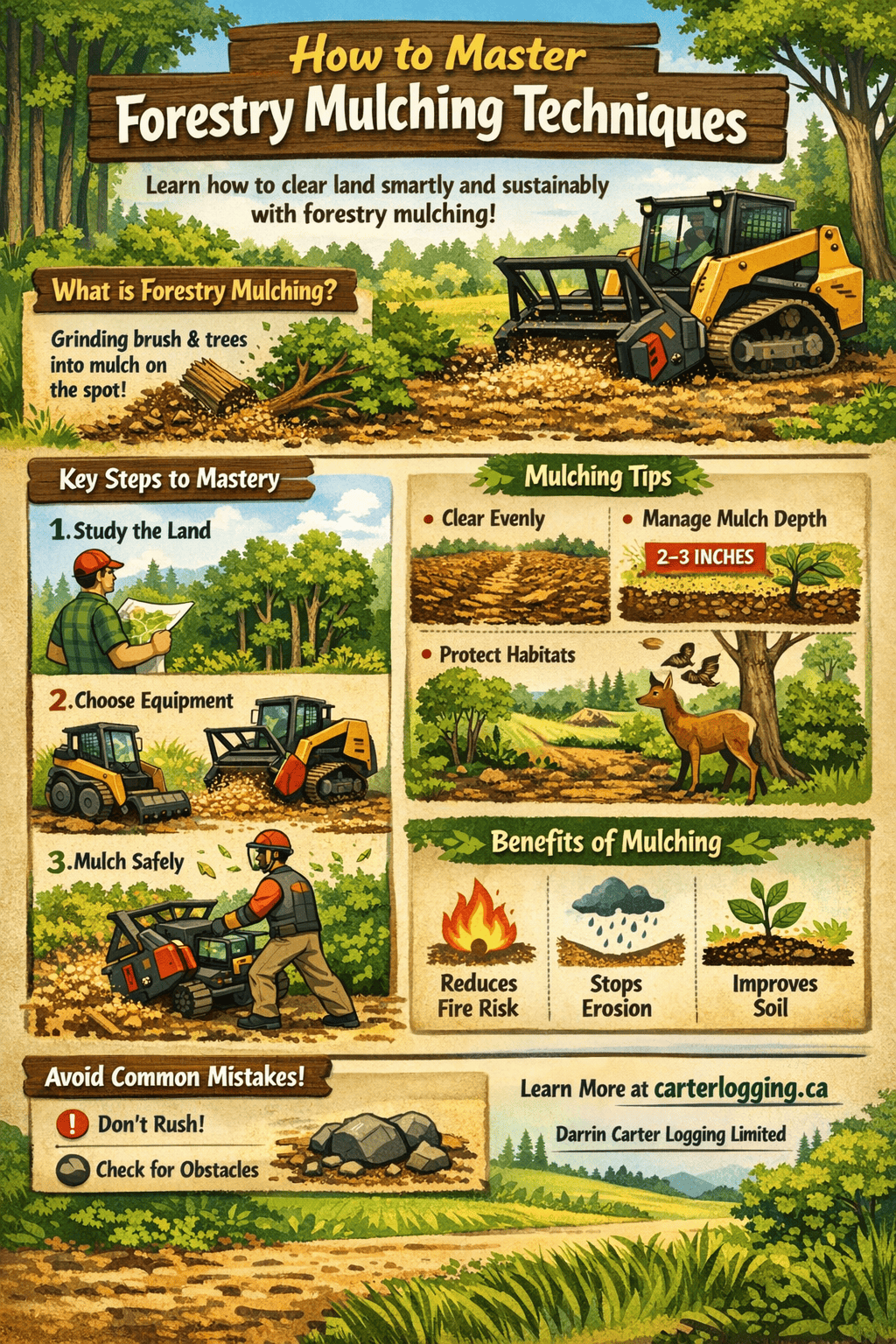
Clearing land does not have to mean tearing it apart. If you want a smarter, cleaner way to manage trees and thick brush, this guide will show you exactly how to master forestry mulching techniques step by step. You will learn what it is, how it works, what tools you need, and how to do it safely and well. By the end, you will understand how to turn messy land into healthy ground with skill and care—and why forestry mulching is changing the way people clear land.
What Is Forestry Mulching and Why Does It Matter?
Imagine clearing trees without piles of burning debris or heavy hauling. Forestry mulching is a land-clearing method that cuts, grinds, and clears vegetation in one step using a special machine. The trees and brush are turned into small wood chips that stay on the ground. This mulch layer protects the soil and adds nutrients over time.
This method matters because it is fast, neat, and gentle on the land. Instead of ripping out roots and leaving bare dirt, it keeps the soil strong. That means less erosion, fewer weeds, and better land health. And that’s just the beginning.
How Forestry Mulching Works
The magic happens with a mulching machine attached to a skid steer, excavator, or tractor. The front drum spins with strong teeth that shred trees and brush into fine pieces. As the machine moves forward, it clears and mulches at the same time.
The wood chips fall back onto the soil like a blanket. This blanket helps hold moisture and reduce runoff when it rains. It also breaks down slowly, feeding the soil. Once you see how simple the process is, you will want to know how to do it the right way.
When Should You Use Forestry Mulching?
Not every job needs the same tool. Forestry mulching is perfect for clearing overgrown land, creating trails, preparing sites for building, and managing property lines. It also works well for farms, ranches, and large residential lots.
If your land has thick brush, small trees, or invasive plants, mulching can solve the problem without damaging the ground. It is especially helpful in areas where burning is not allowed. But to master it, you must first understand your land.
Study the Land Before You Start
Before turning on any machine, walk the land. Look for rocks, stumps, wet areas, and steep slopes. Notice the size and type of trees. This step helps you choose the right equipment and plan your work path.
Good planning saves time and prevents damage. It also keeps you safe. When you know what is ahead, you can move with care and confidence. And once you have a plan, the real skill-building begins.
Choose the Right Equipment
Not all mulching machines are the same. The size of your land and the thickness of the vegetation will decide what you need. Small jobs may only require a skid steer with a mulching head. Larger projects might need a powerful excavator.
Check that the teeth on the drum are sharp and strong. Dull teeth slow down work and strain the machine. Make sure your equipment is serviced and ready. Using the right tool makes mastering the technique much easier.
Start with the Right Technique
Begin by working from one side of the land to the other in rows. Keep a steady pace. Do not rush. Let the drum do the cutting. Move slowly when dealing with thicker trees.
For taller trees, tilt the head slightly and grind them down in layers. This gives better control and creates even mulch. Smooth, even passes create a clean finish. Once you learn to control your speed and angle, your results will improve quickly.
Manage Mulch Depth the Smart Way
Too much mulch can block new growth. Too little may not protect the soil. Aim for a thin, even layer. In most cases, two to three inches is ideal.
If mulch builds up too thick, make another pass to spread it out. Even coverage helps the land recover faster. It also gives the area a neat and natural look. And when the land looks good, you know you are doing it right.
Focus on Safety at All Times
Safety is never optional. Always wear protective gear, including eye and ear protection. Keep a safe distance from people, animals, and buildings.
Watch for flying debris. Clear hidden metal or large rocks before starting. Never operate on slopes that are too steep for your machine. Skilled operators know that staying safe is part of mastering the craft. And safe work builds trust and confidence.
Work with Nature, Not Against It
One of the best parts of forestry mulching is how it supports the environment. The mulch layer helps stop soil erosion and keeps weeds down. It also improves soil quality over time.
Try to leave strong, healthy trees standing when possible. Clear only what is needed. This keeps wildlife habitats intact and protects the natural balance of the area. Smart clearing leads to stronger land in the future.
Control Invasive Species Effectively
Invasive plants can take over quickly. Forestry mulching can stop them by cutting them down and blocking sunlight with mulch.
However, timing matters. Mulch invasive species before they seed. In some cases, follow-up treatments may be needed. Mastering mulching means understanding plant cycles and acting at the right time. This step can save years of future work.
Maintain Your Equipment for Long-Term Success
A well-maintained machine performs better and lasts longer. Clean the mulching head after each job. Check bolts, hoses, and teeth regularly.
Replace worn parts quickly. Routine care prevents breakdowns and costly repairs. When your machine runs smoothly, your work becomes smoother too. And that keeps your projects on track.
Improve Your Skills with Practice
Like any craft, mastery comes with practice. Start with smaller areas to build confidence. Learn how your machine responds to different tree sizes and ground types.
Pay attention to how the mulch spreads. Adjust your speed and angle as needed. Each project teaches something new. Over time, your movements will feel natural, and your results will speak for themselves.
Know When to Call Professionals
Some projects are too large or complex to handle alone. Dense forests, steep terrain, or large tree diameters may require expert help.
Professional crews bring advanced equipment and years of experience. They can complete projects safely and efficiently. When landowners need reliable results, they often turn to experienced providers such as Darrin Carter Logging Limited for trusted land-clearing solutions. Knowing when to seek support is also part of mastering the process.
Understand the Long-Term Benefits
Forestry mulching does more than clear land. It prepares soil for planting, improves property access, and increases land value. It reduces fire risks by removing excess brush.
Because the mulch feeds the soil, future plant growth becomes stronger and healthier. Over time, land treated with care becomes easier to manage. And that long-term gain is what makes this method so powerful.
Common Mistakes to Avoid
Even simple methods can go wrong if rushed. Avoid working too fast, as this creates uneven mulch. Do not ignore hidden obstacles.
Never skip planning or equipment checks. Poor preparation leads to poor results. By staying patient and careful, you avoid these mistakes and improve each time you work. Learning what not to do is just as important as learning what to do.
A Simple Step-by-Step Summary
Mastering forestry mulching comes down to a few clear steps. Study the land. Choose the right equipment. Use steady, controlled movements. Spread mulch evenly. Maintain safety and care for your machine.
When done right, the process is smooth and efficient. The land looks clean but natural. The soil stays protected. And you gain confidence with every project.
Final Thoughts
Forestry mulching is more than a land-clearing method. It is a smart, eco-friendly way to manage property with skill and respect for nature. With the right tools, careful planning, and steady practice, anyone can improve their technique and see real results.
If you want to learn more about professional land-clearing services and proven methods, visit carterlogging.ca to explore expert solutions and guidance from Darrin Carter Logging Limited.
Questions
Is forestry mulching safe for the soil?
Yes. The mulch layer protects the soil from erosion and adds nutrients as it breaks down.
Can forestry mulching remove large trees?
It works best on small to medium trees. Very large trees may need different equipment first.
How long does mulch take to break down?
Most mulch begins to break down within months, depending on weather and wood type.